
Steam vs Dry Carpet Cleaning: Choosing a Suitable Method
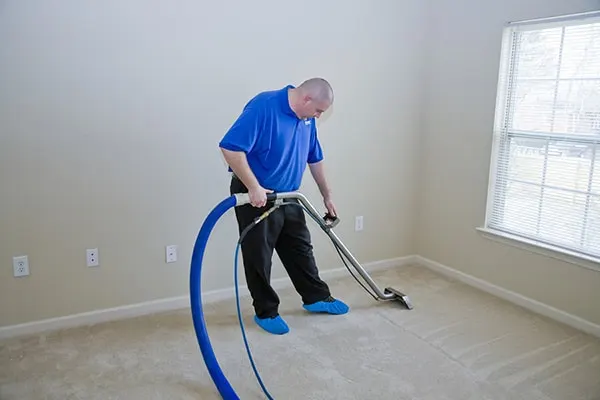
The useful question is which method suits your carpet and the condition it is in. “Steam” and “dry” are broad labels, and neither guarantees stain removal or makes every fibre suitable for the same treatment. Check the manufacturer’s care requirements before choosing a system.
- Hot water extraction uses a liquid cleaning and recovery process; it is not the same as a household steam mop.
- Low-moisture systems still need the right product, application and residue removal.
- Material, backing, existing damage and the purpose of the clean matter more than a universal method ranking.
In this guide
- What hot water extraction does
- What “dry” carpet cleaning can mean
- How to choose between the methods
- Questions to ask before booking
What hot water extraction does
A suitable extraction process loosens soil, applies and recovers cleaning solution, and removes as much moisture as the system permits. It is often marketed as steam cleaning. A steam appliance that heats a surface but does not recover the soil is a different tool.
The result depends on the preparation, chemistry, controlled agitation, recovery and drying, not just hot water. The Carpet and Rug Institute: principles and methods of cleaning discusses these cleaning principles. It is an explanation of methods, not permission to use heat on every textile.
Crown’s carpet service uses hot water extraction where the assessment supports it. Tell the team if the carpet is a sensitive blend, has loose seams or has previously changed colour after cleaning.
What “dry” carpet cleaning can mean
- Absorbent compound: a purpose-made material is worked into the pile and removed according to the system’s instructions. Household baking soda is not an equivalent system.
- Encapsulation: a formulated cleaner is applied and the resulting residue is recovered, often by vacuuming after the specified drying stage.
- Bonnet or absorbent-pad cleaning: a pad collects soil from the pile surface. It should not be described as identical to a restorative extraction clean.
- Foam/shampoo systems: the product, method of soil recovery and residue management determine the process; the label alone tells you little.
A low-moisture option can be important for certain fibres. WoolSafe: fine fibres and moisture-sensitive blends describes the sensitivity of viscose and other fine-fibre constructions. Suitability still needs checking; “dry” does not mean risk-free or suitable for every rug.
How to choose between the methods
| Question | What to establish |
|---|---|
| What is the carpet made from? | Fibre blend, pile construction, backing and any manufacturer restrictions. |
| What needs removing? | Dry soil, an overall soil load, a local stain and an odour may require different work. |
| Can the room dry properly? | Access, airflow, humidity and time before furniture or normal traffic returns. |
| What is the agreed result? | Which areas and treatments are included, and what damage or staining may remain. |
For a rental, a cleaning method is not a guarantee of a deposit outcome. For a valuable rug, do not assume that a process used on fitted synthetic carpet transfers to its dye, fringe or backing.
Questions to ask before booking
- Which method do the carpet’s care instructions allow, and why is it proposed here?
- Are preparation, spot treatment and recovery included? What requires a separate quote?
- Which furniture will remain in place, and what areas will stay inaccessible?
- What drying instructions apply to this room, and who should I contact if a problem returns?
Keep the method comparison separate from the step-by-step visit process. For routine maintenance use our carpet care guide, and for the period after the visit use drying and aftercare.
Discuss a suitable carpet cleaning method
Share the material, condition and access constraints rather than choosing by the word “steam” or “dry” alone.
View the cleaning service and request an assessment or request a quote.
Sources and care guidance
These sources inform the care principles above. Instructions for a named manufacturer’s products do not automatically apply to another item. Sources checked on 16 October 2026.